Key Priorities for the Year Set During VU SR Strategic Planning
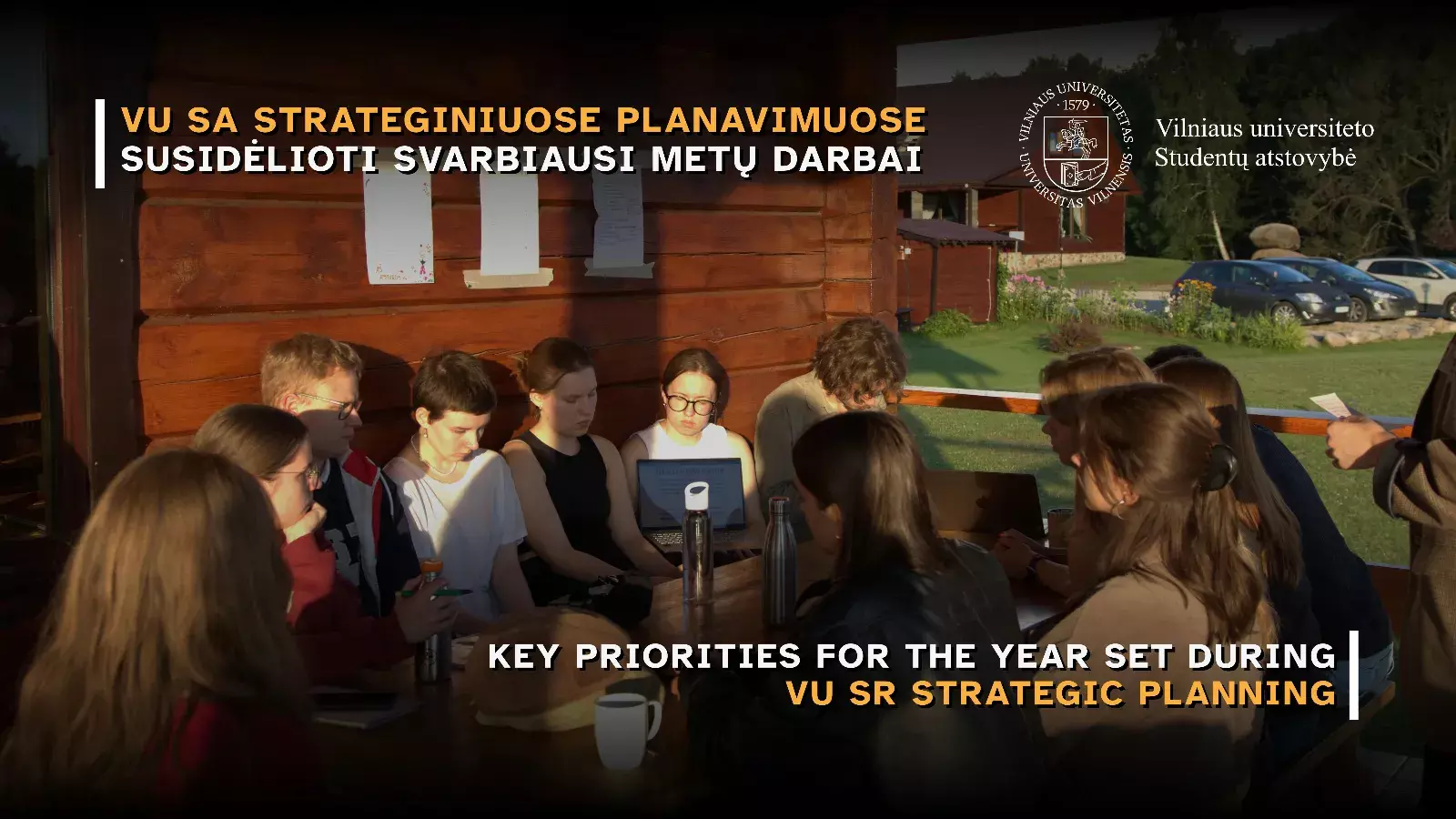
Photo by Gabrielė Jakštonytė
Reading size
From 24 to 26 July, members of the Vilnius University Students’ Representation (VU SR) gathered for their annual strategic planning sessions.
From 24 to 26 July, members of the Vilnius University Students’ Representation (VU SR) gathered for their annual strategic planning sessions. Over the course of three days, participants discussed what changes are needed this year for the Vilnius University and VU SR communities and mapped out concrete steps to make those changes happen.
The directions for this year's strategic goals were first outlined during the VU SR Board and Council retreat held in June. Based on the organisation's strategy and the needs of the community, participants agreed to focus on three priorities: strengthening the culture of feedback, empowering VU SR members, and improving the psychological resilience of the Vilnius University community.
From Understanding the Context to Concrete Actions
The first day of the planning sessions was dedicated to understanding the context behind each strategic goal. Participants reviewed the current situation, discussed work already completed, examined the tools and resources already available within the organisation, and identified the challenges that should be addressed over the coming year.
Participants then split into three working groups and began the planning process. During these sessions, they refined the wording of each strategic goal, defined objectives, identified concrete actions, and established indicators for measuring impact. The groups regularly presented their ideas to one another, received feedback and questions, and used this input to further improve their plans.
"The purpose of these strategic planning sessions was not only to agree on what we want to achieve but also to define very clearly how we will achieve it. The different experiences brought by people from various VU SR divisions allowed us to approach the same issues from multiple perspectives, while our shared discussions helped us identify actions that we will be able to implement consistently throughout the year," says Gabriela Šlepetytė, Coordinator of the VU SR Strategic Planning Process.
Building an Effective Feedback Culture
The first strategic goal aims to establish an effective and consistent feedback cycle for study quality at Vilnius University.
The objective is to ensure that feedback does not end with students simply completing a survey. Students should know that their opinions have been heard, lecturers should receive support in collecting and applying feedback, and student representatives should have the tools needed to use the collected information to initiate meaningful improvements in the study process.
To achieve this, VU SR will strengthen the competencies of student representatives serving on Study Programme Committees in collecting and analysing feedback. A toolkit for mid-semester feedback will be developed for lecturers, while the end-of-semester survey system will be reviewed and improved. Efforts will also be made to encourage lecturers to explain to students what changes have been introduced to their courses based on previous feedback.
"We want fewer situations where a student completes a survey but never finds out what happened to their responses. Feedback should become part of our organisational culture: students share their experiences, those experiences are analysed, action is taken, and the community can clearly see the changes their feedback has helped create," explains Šlepetytė.
Making Better Use of Existing Knowledge
The direction of the second strategic goal changed during the planning process. Initially, the focus was on developing a member engagement plan. However, after evaluating the organisation's current situation, participants concluded that strengthening institutional memory should come first.
Over the years, VU SR has accumulated a wide range of methodological resources, practical tools, and organisational experience. However, this knowledge is not always easy to find, regularly updated, or consistently used in everyday activities. The new priority is therefore to foster a culture of collecting, preserving, transferring, and actively using institutional knowledge.
The organisation plans to gather and systematise existing materials, evaluate which resources remain relevant, update the most important ones, and establish a regular review process. At the same time, VU SR members will be encouraged to use accumulated knowledge when planning activities, making decisions, and transferring responsibilities to new members.
"We are not abandoning the idea of member engagement. Instead, we are looking for a more sustainable way to achieve it because we already have a great number of tools available. They create little value if members do not know where to find them, how to use them, or why they matter in the first place. Strong institutional memory can become the foundation that helps people become involved more quickly and confidently take on responsibility," says Šlepetytė.
Strengthening Psychological Resilience
The third strategic goal seeks to ensure that members of the Vilnius University community know how to strengthen their psychological resilience and are better prepared to recover from challenges or crisis situations.
This year, the focus will be not only on raising awareness but also on providing the community with practical knowledge and tools. Another priority is ensuring that students receive clear and reliable information in difficult situations and that VU SR itself is prepared to respond to crises in a consistent and coordinated manner.
Planned actions include strengthening resilience-related competencies throughout students' university experience, reviewing and expanding communication channels, and preparing an internal crisis prevention and management plan for VU SR.
"During challenges or crises, it is not enough to simply tell people to be resilient. The community needs to know where to find reliable information, what steps to take, and where to seek help. Our goal is to make this knowledge available before difficult situations arise, not only once they have already happened," Šlepetytė emphasises.
A Plan Whose Success Will Be Measured by Real Change
The goals and actions refined during the strategic planning sessions will form the basis of VU SR's Annual Strategic Action Plan. The plan will be reviewed and approved by the VU SR Parliament, after which the most important stage will begin: turning the planned solutions into reality.
"After these strategic planning sessions, we have a much clearer picture of where we want to be in a year's time. The real success of this process will not be measured by the length of the document or the number of completed activities, but by whether students experience tangible improvements in their studies, whether VU SR members can make better use of the organisation's accumulated knowledge, and whether our community is better prepared to face future challenges," Šlepetytė concludes.


